How to Start Selling Online in India (2026 Guide) By Pansofic Mall
The Indian ecommerce ecosystem has approached a structural growth stage. Online money has become normalized, logistics systems extend to the deepest parts of the tier-2 and tier-3 cities, and the population of Bharat has already learned how to buy both mundane goods and more exclusive offerings online.
If you are searching for:
- how to begin selling online in India.
- sell products online India
- eBay sites in India.
- Online music market.
This manual is aimed to be the ultimate guidebook to you in the year 2026. It discusses the business models, costs, documents, compliance, logistics, marketing basics, risk management and why a multi-vendor ecommerce site such as Pansofic Mall can be a good beginning.
It is not a generalized outline. It is a realistic game plan for Indian sellers.

The reason why selling online in India is gaining speed in 2026.
The expansion in ecommerce in India is structural based and not short TF.
Digital Payment Penetration
Interpretation of digital payment penetration refers to the process by which the bank engages with their customers to adopt the service and use it as a standard payment method.
Digital penetration is a process where the bank interacts with their customers to accept the service and utilize it as a standard form of payment.
As UPI is adopted throughout urban and rural India the transaction friction has plummeted. The cash dependency is on a decline, and more buyers are confident in prepaid orders.
Tier-2 and Tier-3 Market Expansion.
The non-metro cities are witnessing growth in online buyers. The demand has ceased to be concentrated in Delhi, Mumbai, or Bengaluru. The sellers are reaching out to a truly pan-Indian audience.
Better Logistics Infrastructure.
There is an enhancement of courier penetration. More frequent purchases have been boosted by faster deliveries, easier reverse logistics and expanded serviceability.
Consumer Trend efficient toward convenience.
Consumers like to compare items, read reviews and order at home as opposed to going to the physical store. The need to be convenient has become an obligation.
Particularism of Niche and Local Productions.
The consumers of India are actively seeking regional, artisanal, spiritual, organic and rooted products. This allows small and medium sellers.
The opportunity is real. The most important thing is to have organized implementation.
Business Models: How to sell online in India in different ways.
You need to make a decision about your operational model before starting. The type of platform will influence margins, brand control, scalability, and risk.
Sale on Big marketplaces.
Examples include:
- Amazon India
- Flipkart
- Meesho
Advantages
- Immediate access to traffic
- High consumer trust
- Developed logistics systems.
- Organized seller controls.
Challenges
- Intense price competition
- Expensive advertising cost and commission.
- Lack of brand differentiation.
- Risk of account suspension
- Compression of the margins as a result of discounting.
The model is suitable in the cases of high-volume sellers who offer competitive prices and strong supply-chain.
Selling on Your own Web Site.
Platforms commonly used:
- Shopify
- WooCommerce
Advantages
- Complete brand control
- Customer data ownership
- Higher profit margins
- Flexible pricing
Challenges
- Requires paid marketing
- SEO investment required
- Technical installation and servicing.
- No built-in traffic
The model works best when you already have a brand name or where you can invest in marketing on a regular basis.
The sale is on a Multi-Vendor Ecommerce Site.
An intermediary model between visibility and affordability.

Rather than having to compete straight against thousands of sellers on oversaturated marketplaces or spend the effort and time to build your own web presence, you become a member of a multi-vendor ecosystem which supports sellers.
One such platform is:
Why This Model is becoming popular.
- Lower competitive clutter
- More seller visibility
- Supportive onboarding
- Lower entry barrier
- Targeted audience groups.
This model minimizes risk and has exposure to new sellers and new brands.
How to Get Started Selling online in India without a Website.
You do not necessarily need to have a separate site to start with.
This is a detailed action plan.
Step 1: Find the Right Product Category.
Ask yourself:
- Is there demand?
- Can I source consistently?
- Is the gross margin at least 30%?
- Is the product easy to ship?
In 2026, the categories with high potentials are:
- Spiritual products
- Books
- Organic food items
- Home decor
- Gifting products
- Handmade crafts
Profitability is determined by the product selection.
Step 2: Validate Demand
Prior to ordering inventory in bulk:
- Marketplace search keywords.
- Check pricing trends
- Analyze review volumes
- Identify gaps in customer complaints.
Identify prospects where there is a demand and the quality of the services is poor.
Step 3: Unit Economics Calculation.
Example calculation:
Product Cost: ₹200
Packaging: ₹20
Shipping: ₹60
Platform Commission: ₹40
Total Cost: ₹320
Assuming that selling price is ₹499, gross margin before returns is ₹179.
You will have to model returns (5-15% based on category).
Do not rely on guesswork.
Step 4: Finalize Documentation.
Essential documents needed in India:
- PAN Card
- Aadhaar Card
- Bank Account
- Mobile Number
- Email ID
Extra (category-based) requirements:
- GST Registration (*compulsory on many platforms)
- FSSAI License (food products)
- Trademark (if branding)
Multi-vendor stores also tend to be less difficult to document than larger marketplaces are.
Step 5: Sign up on a Seller Ecommerce Website.
You do not need to create a site, but instead, you can become a seller on a multi-vendor platform.
On websites such as Pansofic Mall, sellers can:
- Upload products
- Reach Indian buyers
- Profit against avoidance of cost of website development.
- Integrate on sales and operations.
This limits initial technical load greatly.
Full Cost Distribution: What Does it Cost to Start?
We will take painful startup expenses.
Initial Investment
Component | Estimated Cost (₹) |
Inventory | 10,000 - 50,000 |
Packaging | 2,000 - 5,000 |
Photography | 3,000 - 10,000 |
GST Registration | 0 - 2,000 |
Miscellaneous | 3,000 - 5,000 |
Minimum realistic initial start up budget: ₹15,000-₹30,000.
Ongoing Operational Costs
- Platform commission
- Shipping charges
- Return handling
- Packaging replenishment
- Optional advertising
The efficiency of operations determines profitability.
Logistics & Shipping Strategy.
You must choose between:
Platform-Managed Logistics
- Platform arranged courier.
- Minimized complexity of operation.
- Recommended for beginners
Self-Managed Shipping
- Direct courier agreements.
- Potentially higher margin
- More responsibility
Platform, logistics management by the platform are recommended in the case of new sellers.
Payment Settlement Cycle
Typical flow:
- Order placed
- Product shipped
- Delivery completed
- Return window closes
- Payment released
5-7 days settlement cycles (Depending on platform).
Cash-flow planning is essential.
Marketing Basics of Online Sellers.
A simple listing will not bring in regular sales.
Listing Optimization
- Appropriate headings and major keywords.
- High-resolution images
- Bullet-point benefits
- Accurate specifications
Do not imitate competitor descriptions. Original content sells better and better.
Keyword Targeting
Long-tail keywords to be used include:
- India: Buy spiritual books online.
- Low-price organic incense sticks.
- Natural Honey
Traffic based on search intent has better conversion rates.
Social Media Distribution
Focus on:
- Instagram reels
- Facebook communities
- WhatsApp distribution
- Pinterest boards
Short form content works cheaply to generate visibility.
Reviews and Social Proof
Request buyers to make reviews.
Better ratings enhance high conversion rate.
New Seller Risk Management.
Common risks include:
- High return rate
- Price wars
- Negative reviews
- Inventory mismanagement
- Cash-flow crunch
Mitigation strategies:
- Clear product descriptions
- Strong packaging
- Inventory planning that is conservative.
- Proper timing of dispatch schedules.
Treat ecommerce as a system as opposed to a side experiment.
What are the Reasons to use an online E-Commerce Vendor and Pansofic Mall?
Three fundamental aspects need to be considered when considering online selling sites in India:
- Competition density
- Cost structure
- Seller support
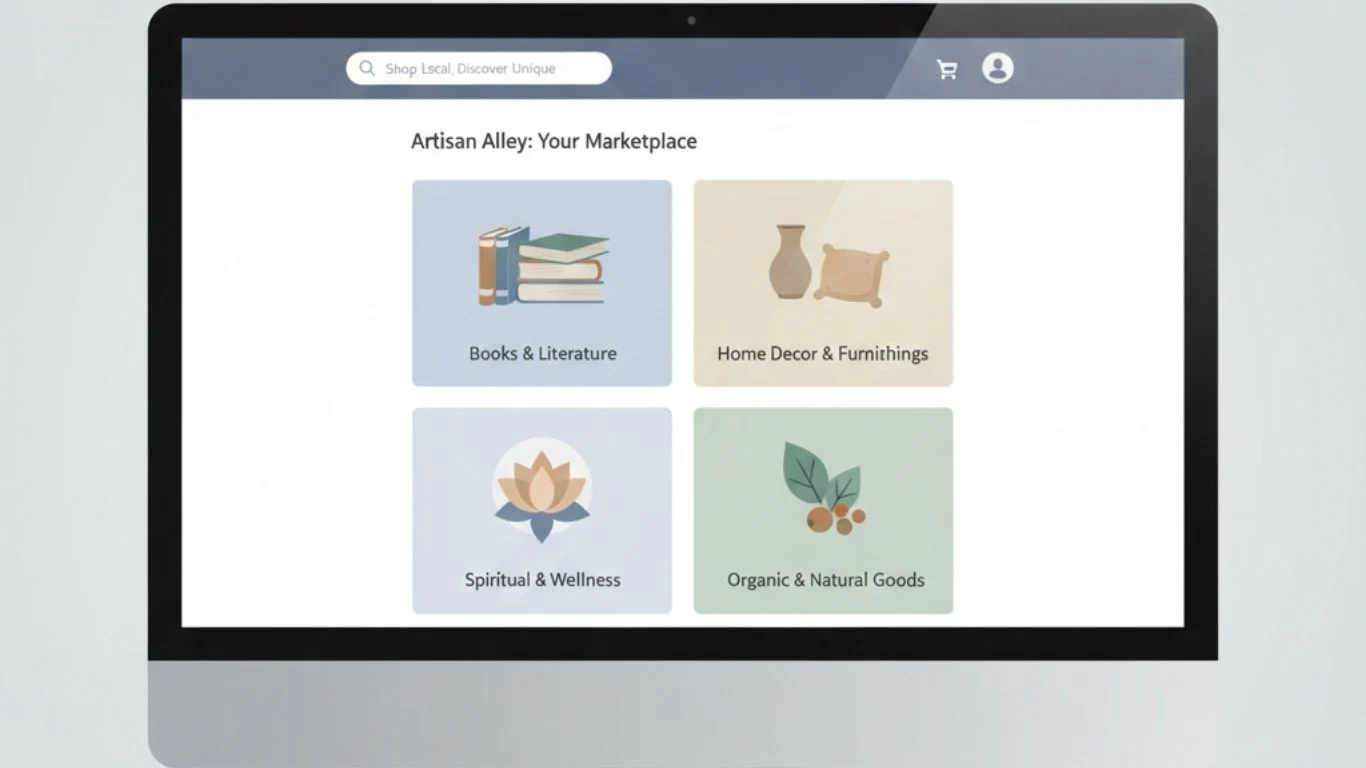
Pansofic Mall is an ecosystem that is vendor-friendly targeting small and medium-sized businesses.
Key Advantages
Focused Vendor Growth
The platform is built to enable upcoming sellers to create awareness rather than be overwhelmed by big brands.
Less Competitive Saturation.
Fewer listing clutters enhance product findability.
Simplified Onboarding
The registration and documentation processes are facilitated.
Multi-Category Opportunity
Buyers will be able to sell books, lifestyle, spiritual, gifting, and other new segments.
Useful in First-Time Sellers.
Less entry barrier than significant marketplaces.
The model offers scalability without too much risk to Indian entrepreneurs who want to enter the ecommerce business with some level of balance.
30 Day Implementation to begin selling online in India.
Week 1
- Finalize product
- Calculate pricing
- Arrange inventory
Week 2
- Complete documentation
- Register as vendor
- Carry out product photography.
Week 3
- Upload optimized listings
- Activate logistics
- Begin social promotion
Week 4
- Analyze sales data
- Adjust pricing if required
- Encourage reviews
- Plan inventory scaling
Momentum depends on the speed of execution
Frequently Asked Questions
1. Is GST required to sell online in India?
For most marketplaces, yes. Nonetheless, product category and platform policies make them have different requirements.
2. What is the profit I can make on selling online?
The margins can go as low as 20 to 50 percent depending on the product type and cost management.
3. Will I be able to make low-investment sales?
Yes. Many of them will be starting at ₹15,000-₹25,000 and progressing.
4. Do I need a warehouse?
No. A large number of sellers work at home.
Final Conclusion
It does not mean that it will be purely by chance that online selling in India in 2026 can be realized. It is about:
- Product selection
- Margin discipline
- Platform choice
- Operational consistency
- Customer experience
There is no need to have a big team or great capital. You require a methodical approach and proper seller ecommerce platform.
A multi-vendor platform such as Pansofic Mall provides an Indian entrepreneur with an agreeable entry point into the digital commerce industry when competition levels are not high.
Make a Start on Your Online Selling.
In case you are a manufacturer, reseller or brand owner who is willing to sell products online in India:
- Become a vendor at Pansofic Mall.
- Strategic product listing.
- Access consumers throughout India.
- Create a sustainable stream of digital revenue.
The Indian ecommerce market is growing. Those sellers who do early, strategic, executions will create long-term benefit.


Comments
Post a Comment